What is a nootropic supplement? Phytomem One explains

Updated August 2026 · reviewed by the Phytomem Research Team. We are an independent information resource, not a medical provider, and this article is educational rather than medical advice.
A nootropic supplement is a dietary product — a blend of vitamins, minerals or plant extracts — intended to support everyday thinking, such as memory, focus and mental clarity, in otherwise healthy people. It is a food supplement, not a medicine, and it is not designed to diagnose, treat or cure any condition. A botanical once-a-day like Phytomem One is a good worked example of the category: a single tablet that brings several well-studied plant extracts into the day.
What a nootropic supplement actually is, in one place.
- The plain definition
- A food supplement of nutrients or botanicals meant to support normal memory, focus and clarity in healthy adults — not a drug and not a treatment.
- How they mostly work
- Indirectly — by supporting blood flow, supplying antioxidants, providing raw materials for neurotransmitters, or steadying the metabolic background the brain runs on.
- Two big families
- Natural (vitamins, minerals, plant extracts, sold as supplements) and synthetic (lab-made compounds, some of them medicines).
- Honest expectation
- Effects are usually modest and vary between people; the biggest cognitive gains still come from sleep, exercise and diet.
“Nootropic” has become one of the most-searched words in wellness, and also one of the most misunderstood. Marketing sometimes makes these products sound like a switch that instantly sharpens the mind, while the honest picture is quieter and more useful. This beginner’s guide defines the term clearly, explains the main ways nootropics work, walks through the ingredient categories you will meet on labels, and uses Phytomem One as a concrete example of a botanical once-a-day. Where the evidence is thin, we say so.

What is a nootropic supplement, exactly?
A nootropic supplement is a dietary supplement formulated to support normal cognitive functions — memory, concentration, mental clarity and sometimes mood — in people who are already healthy. The word “nootropic” was coined in the 1970s from Greek roots meaning roughly “to bend the mind,” and it originally described compounds thought to support cognition with a good safety profile. Today the term is used loosely for everything from a cup of coffee to a multi-ingredient capsule. The key legal and practical point is that a nootropic sold as a supplement is regulated as a food, not a drug: it can support the structure and function of the body in general terms, but it cannot claim to treat, cure or prevent a disease. That single distinction explains most of the careful language you see on reputable labels.
How do nootropics work in the brain?
Most nootropic ingredients work indirectly, by improving the conditions the brain needs to work well, rather than by flipping a single cognitive switch. There is no one mechanism that covers the whole category, but a handful of routes come up again and again. Some ingredients support healthy blood flow, so the brain receives a steady supply of oxygen and nutrients. Others are antioxidants that help the body defend cells against everyday oxidative stress. A third group supplies the raw materials — amino acids, B-vitamins, certain fats — that the brain uses to build neurotransmitters and cell membranes. And a growing group of botanicals works on the metabolic background: steady blood sugar and healthy metabolism give the brain a more even fuel supply across the day.
Two honest caveats belong right here. First, the size of any effect is usually modest, and it varies a great deal from one person to the next. Second, a well-fed, well-rested, well-exercised brain has far less room to improve from a pill than a depleted one — which is why lifestyle remains the foundation. If you want the fuller picture on that, our guide to how to improve memory and focus naturally lays out the habits that matter most.
What are the main types of nootropics?
Nootropics divide into a few broad families, and knowing which one a product belongs to tells you most of what you need before reading the label. The clearest split is between natural and synthetic, but there are useful sub-groups within each.
What is the difference between natural and synthetic nootropics?
Natural nootropics are vitamins, minerals and plant extracts sold as food supplements, while synthetic nootropics are lab-made compounds, some of which are regulated as prescription medicines. Caffeine, L-theanine from tea, saffron and Ginkgo sit on the natural side; racetams and certain prescription stimulants sit on the synthetic side. Neither family is automatically “better” — they simply suit different goals and carry different rules and risks. If you want to weigh this up in detail, we compare the two in natural vs synthetic nootropics.
Are single ingredients or stacks better for beginners?
A “stack” is simply a combination of several nootropic ingredients taken together, and for most beginners a thoughtfully built stack is more practical than juggling single ingredients. The logic is that different ingredients cover different routes — one for blood flow, one for antioxidants, one for metabolic steadiness — and a single daily tablet spares you from measuring and remembering several separate products. The trade-off is that a stack is only as good as its formulation: doses should be sensible and disclosed, not hidden inside a vague “proprietary blend.”
Where do everyday foods and drinks fit?
Many of the most reliable nootropics are foods, not pills: coffee and tea, oily fish, berries, leafy greens and dark chocolate all supply compounds that support the brain. This matters because it keeps expectations realistic — a supplement is a convenient top-up to a good diet, never a replacement for it. Our companion guide to the best foods for brain health and memory covers the plate in full.
| Nootropic family | Examples | How it is usually taken |
|---|---|---|
| Botanical extracts | Saffron, Ginkgo, olive leaf, cinnamon | Capsule or tablet, often once daily |
| Vitamins & minerals | B-vitamins, magnesium, zinc | Daily supplement or from food |
| Amino acids & fats | L-theanine, omega-3 (DHA/EPA) | Supplement or oily fish |
| Stimulants | Caffeine, caffeine + L-theanine | Coffee, tea, or supplement |
| Synthetic compounds | Racetams, prescription stimulants | Often medicine, doctor-led |
See the exact dose in Phytomem One →
What ingredients are in a cognitive supplement?
The ingredients in a cognitive supplement fall into a small set of recurring categories, and once you recognise them a label becomes far easier to read. Rather than memorising dozens of names, it helps to ask what each ingredient is trying to do. The table below gathers some of the best-known nootropic ingredients, several of which appear in Phytomem One, alongside the plain reason each one is discussed.

| Ingredient | What it is | Why it is discussed |
|---|---|---|
| Saffron | Persian spice | A long tradition in mood and cognitive wellness; among the more researched botanicals in the category. |
| Morosil red orange | Polyphenol-rich citrus | A Sicilian blood-orange extract studied for its role in metabolic wellness. |
| Berberine | Plant alkaloid | One of the most studied botanicals for supporting healthy metabolism, part of fuelling the brain. |
| Ceylon cinnamon | “True” cinnamon | A warm culinary spice widely studied for general metabolic wellness. |
| Olive leaf | Mediterranean staple | A rich natural source of the antioxidant polyphenol oleuropein. |
| Omega-3 (DHA/EPA) | Fats from oily fish | Structural fats the brain is partly built from; a nutrient staple of brain diets. |
Notice a pattern: many of the most-discussed nootropic ingredients are botanicals with a metabolic angle. That reflects a simple idea — a brain fuelled by steady blood sugar and protected by antioxidants tends to work more comfortably. For a closer look at two of the headline extracts, read our guide to saffron and berberine for brain health.
What can you realistically expect from a nootropic supplement?
The honest expectation from a nootropic supplement is modest, gradual support for everyday thinking — not a dramatic, drug-like transformation. In practice that can mean feeling a little steadier through an afternoon, or finding a task holds your attention a touch more easily, on top of good sleep and movement. It is important to separate the evidence tiers: the strongest evidence in the whole field sits behind lifestyle habits, a middle tier sits behind well-studied nutrients like omega-3s and B-vitamins in people who are low in them, and a more mixed, still-developing tier sits behind many botanical extracts. None of this makes botanicals worthless — it simply sets the expectation at “a helpful layer” rather than “a cure,” and reminds us that results vary between individuals.
A botanical nootropic, kept simple
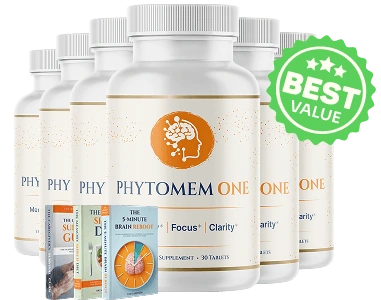
Phytomem One is a once-daily tablet pairing saffron and Morosil red orange with a 10-in-1 botanical blend — a straightforward way to bring several well-studied extracts into the day. The six-bottle bundle is the best value at $49 per bottle, with free U.S. shipping and a 60-day guarantee, so a full multi-month routine never runs out mid-stride.
Check today’s Phytomem One pricing — from $49/bottleHow does Phytomem One work as a nootropic supplement?
Phytomem One is a botanical nootropic supplement in the form of a single once-daily tablet, designed to bring several well-studied plant extracts into the day without complexity. It pairs saffron and Morosil Sicilian red orange with a 10-in-1 blend that includes berberine, Ceylon cinnamon, olive leaf, brown-seaweed extracts, banaba and kudzu — a spread of ingredients weighted toward the antioxidant and metabolic routes described above. You take one tablet with water at the same time each day, which is the kind of simple, repeatable step that actually sticks. It is a dietary supplement for everyday memory, focus and clarity, not a medicine, and not a treatment for any disease. If you want the full breakdown, our Phytomem One review walks through every ingredient and the pricing.
How do you choose a nootropic supplement safely?
Choosing a nootropic supplement safely comes down to reading the label honestly and matching the product to your own health, not to the boldest marketing claim. A few checks do most of the work, and they apply whether you are looking at a botanical tablet or a multi-ingredient capsule.
- Look for disclosed doses, not a vague “proprietary blend” that hides how much of each ingredient you actually get.
- Prefer transparent, well-made products — clear ingredient lists, sensible amounts, and manufacturing you can verify.
- Be sceptical of disease claims. A supplement that promises to treat or cure a condition is making a claim it is not allowed to make.
- Check for interactions. Some botanicals, including berberine and cinnamon, can interact with medicines for blood pressure or blood sugar.
- Give it a fair, consistent trial — most botanical formulas need eight to twelve weeks of daily use before you can judge them.
| Ingredient type | Typical time to notice | Best used as |
|---|---|---|
| Stimulants (e.g. caffeine) | Within an hour | Short-term alertness |
| Amino acids (e.g. L-theanine) | Same day | Calm, steady focus |
| Nutrients (omega-3, B-vitamins) | Weeks, if you were low | Filling a dietary gap |
| Botanical blends | 8–12 weeks | Gradual everyday support |
When should you talk to a doctor first?
A nootropic supplement is for supporting an already-healthy mind and is never a substitute for medical care. Speak with a pharmacist or doctor before starting one if you take any prescription medication, are pregnant or breastfeeding, have a diagnosed condition, or are unsure how an ingredient might fit with your care. And if you notice persistent or worsening problems — marked memory loss, confusion, or changes that interfere with daily life — those signs deserve a professional assessment rather than a supplement. A quick conversation is the safest first step, and it makes anything you do decide to add fit comfortably alongside the rest of your routine.
Frequently asked questions
What is a nootropic supplement in simple terms?
A nootropic supplement is a dietary product that combines vitamins, minerals or plant extracts intended to support everyday cognitive functions such as memory, focus and mental clarity in healthy people. It is a food supplement, not a medicine, and it is not designed to diagnose, treat or cure any condition. Botanical formulas like Phytomem One sit in this category as a once-a-day tablet.
How do nootropics work in the brain?
Most nootropic ingredients work indirectly rather than by switching a single brain lever. Common routes include supporting healthy blood flow, supplying antioxidants that help protect cells, providing the raw materials the brain uses to make neurotransmitters, and steadying the metabolic background the brain runs on. The size of any effect is usually modest and varies from person to person.
Are natural nootropics better than synthetic ones?
Neither is automatically better; they are different categories. Natural nootropics are vitamins, minerals and plant extracts sold as food supplements, while synthetic nootropics are lab-made compounds, some of which are regulated as medicines. Many people who want a gentle daily option choose a botanical formula such as Phytomem One, but the right choice depends on your goals and your doctor’s guidance.
Is Phytomem One a nootropic supplement?
Yes. Phytomem One is a botanical nootropic supplement in the form of a once-daily tablet, built on a 10-in-1 blend that pairs saffron and Morosil red orange with berberine, Ceylon cinnamon, olive leaf and other plant extracts. It is a dietary supplement for everyday memory, focus and clarity, not a medicine or a treatment for any disease.
How long does a nootropic supplement take to work?
It depends on the ingredient. Some, such as caffeine, act within an hour, while most botanical and nutrient-based nootropics build their support gradually. For a botanical once-a-day like Phytomem One, most people give a routine at least eight to twelve weeks of consistent use, and individual results vary.
Are nootropic supplements safe to take every day?
Well-formulated nootropic supplements taken at label doses are generally well tolerated by healthy adults, but safety still depends on the ingredients and on your own health. If you take prescription medication, are pregnant or breastfeeding, or have a diagnosed condition, check with a pharmacist or doctor first, because some botanicals can interact with certain medicines.
Try Phytomem One risk-free for 60 days →
Phytomem One is a dietary supplement, not a treatment for any medical condition. These statements have not been evaluated by the Food and Drug Administration. This product is not intended to diagnose, treat, cure or prevent any disease. Always consult a qualified healthcare professional about your individual needs.
References & further reading
- National Center for Complementary and Integrative Health (NCCIH). Dietary Supplements for Cognitive Function. nccih.nih.gov/health/cognitive-function
- National Institutes of Health, Office of Dietary Supplements. Dietary Supplements: What You Need to Know. ods.od.nih.gov
- Mayo Clinic. Memory loss: 7 tips to improve your memory. mayoclinic.org
- Examine.com. Nootropics — evidence-based overview. examine.com/supplements/nootropics
- Examine.com. Saffron (Crocus sativus) — evidence-based summary. examine.com/supplements/saffron
- PubMed / U.S. National Library of Medicine. Nootropics and cognition — research literature. pubmed.ncbi.nlm.nih.gov
These references describe the ingredients and habits in general terms and do not constitute evidence that any product treats, cures or prevents any condition.
Keep reading: natural vs synthetic nootropics · how to improve memory and focus naturally · back to the Phytomem One blog · homepage.