Best foods for brain health and memory: the Phytomem One list

Updated August 2026 · reviewed by the Phytomem Research Team. We are an independent information resource, not a medical provider, and this article is educational rather than medical advice.
The best foods for brain health and memory are, happily, the same whole foods that support the rest of the body: oily fish, leafy greens, berries, nuts, beans, whole grains and good olive oil. They supply the omega-3 fats, polyphenols and steady energy the brain relies on — and building meals around them is one of the most reliable, natural ways to support a sharp, focused mind.
The brain-friendly plate, in one place.
- The pattern
- A Mediterranean-style plate — plants, olive oil, fish and nuts — is the single most studied way of eating for healthy ageing.
- Top of the list
- Oily fish for omega-3s, berries and leafy greens for antioxidants, and nuts and olive oil for healthy fats.
- The colour rule
- The more colours on your plate, the wider the range of protective plant compounds you take in.
- What to limit
- Ultra-processed foods, refined sugar and sugary drinks are best kept to a minimum.
- Where supplements fit
- A botanical formula like Phytomem One can complement the plate, but food and habits come first.
No single “brain food” works magic. What matters is the overall pattern — a plate built mostly from whole plants, healthy fats and lean protein, eaten consistently. This guide breaks the best choices into simple groups, adds a nutrient table and a sample day, and shows where a botanical supplement like Phytomem One fits alongside good food (NIH NCCIH).
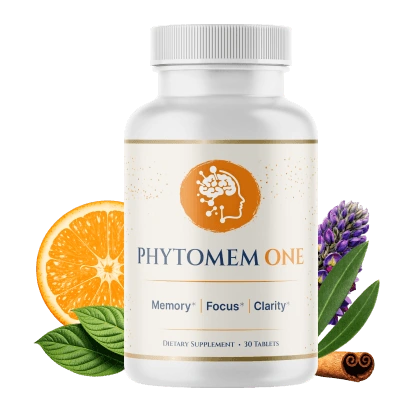
Why does food matter so much for the brain?
The brain is only about two per cent of your body weight but uses roughly a fifth of your daily energy. It is also rich in fats and works around the clock, which makes it sensitive both to the quality of the fuel it receives and to oxidative stress. A diet built on whole foods delivers a steady supply of energy plus the antioxidants and healthy fats that help protect brain cells over time; a diet heavy on refined sugar and ultra-processed food does the opposite. That is the simple case for eating well: you are feeding the most demanding organ you own.
What are the best food groups for the brain?
1. Oily fish and omega-3 sources
Fatty fish — salmon, sardines, mackerel, trout — are the standout source of the omega-3 fats that make up part of the brain’s own structure (NIH Office of Dietary Supplements). Aim for two portions a week. Plant eaters can lean on walnuts, chia, flax and algae-based options.
2. Leafy greens and colourful vegetables
Spinach, kale, rocket and other greens are rich in folate, vitamin K and antioxidants. Add deeply coloured vegetables — peppers, tomatoes, beetroot, red cabbage — and you widen the range of protective plant compounds on your plate.
3. Berries and deeply coloured fruit
Blueberries, blackberries, strawberries and cherries are especially high in anthocyanins, the same family of pigments found in the Sicilian red orange behind Phytomem One’s Morosil extract. Whole fruit, with its fibre intact, is always the better choice over juice.

4. Nuts, seeds and extra-virgin olive oil
Nuts and seeds add healthy fats, vitamin E and fibre, while extra-virgin olive oil — the cornerstone of the Mediterranean table — is rich in the same polyphenol family as the olive-leaf oleuropein in Phytomem One (Martínez-Lapiscina EH et al., J Neurol Neurosurg Psychiatry 2013). A drizzle over vegetables is an easy daily habit.
5. Beans, whole grains and steady energy
Beans, lentils, oats, barley and quinoa release their energy slowly, which helps keep blood sugar — and therefore focus — on steadier ground through the day. They are also a generous source of fibre and plant protein.
See how Phytomem One complements your plate →
A brain-food nutrient table
Different foods bring different tools to the table. This table maps the core groups to the nutrients they are best known for and an easy way to use them.
| Food group | Best known for | Easy way to use it |
|---|---|---|
| Oily fish | Omega-3 fats | Two portions a week; tinned sardines count. |
| Leafy greens | Folate, vitamin K, antioxidants | A daily handful in a salad, soup or stir-fry. |
| Berries | Anthocyanin polyphenols | A handful over oats or yoghurt. |
| Nuts & seeds | Vitamin E, healthy fats | A small daily handful as a snack. |
| Olive oil | Oleuropein polyphenols | Drizzled raw over vegetables. |
| Beans & whole grains | Fibre, steady energy | Swap refined grains for intact ones. |
What does a brain-friendly day look like?
You do not need an exotic menu — just a colourful, whole-food rhythm. Here is one simple example.
| Meal | Example | Why it helps |
|---|---|---|
| Breakfast | Oats with berries, walnuts and seeds | Slow energy plus antioxidants and healthy fats. |
| Lunch | Big salad with leaves, beans, olive oil and tinned salmon | Greens, omega-3s and fibre in one bowl. |
| Snack | An orange and a small handful of almonds | Polyphenols and vitamin E between meals. |
| Dinner | Grilled fish or lentils with roasted colourful veg | Protein and a wide range of plant compounds. |
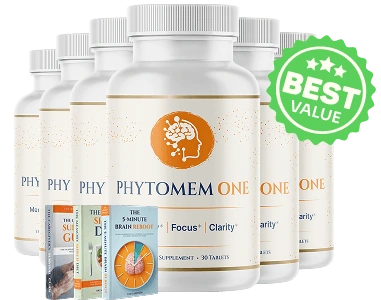
Complement your plate
Phytomem One pairs saffron and Morosil red orange with a 10-in-1 botanical blend in one daily tablet. The six-bottle bundle is the best value at $49 per bottle, with free U.S. shipping and a 60-day guarantee.
Order Phytomem One — from $49/bottleWhat foods are worth limiting?
Just as some foods support the brain, a few pull in the other direction when they dominate the plate. Ultra-processed snacks, refined sugar, sugary drinks and excess alcohol are all best kept occasional rather than everyday. You do not need perfection — simply tilt the balance toward whole foods most of the time and let the treats be treats.

Where do supplements fit?
Food is the foundation, and no supplement replaces a good plate. That said, several of the plant compounds found in brain-friendly foods — the anthocyanins of red oranges, the polyphenols of olive leaf, the warmth of cinnamon — also appear in Phytomem One, which gathers ten botanicals into a single daily tablet. Think of it as a convenient companion to a whole-food diet, not a shortcut past it. To understand how two of its headline actives work, read our guide to saffron and berberine for brain health. We weigh the two approaches against each other directly in brain food versus brain supplements.
Frequently asked questions
What are the best foods for brain health?
Oily fish, leafy greens, berries, nuts and seeds, beans, whole grains, olive oil and colourful vegetables are consistently among the best foods for brain health, supplying omega-3s, polyphenols and steady energy.
Which foods are best for memory specifically?
Berries and other deeply coloured fruits, leafy greens, oily fish, walnuts and extra-virgin olive oil are often highlighted for memory because they are rich in the antioxidants and healthy fats the brain uses.
Is the Mediterranean diet good for the brain?
The Mediterranean pattern — built on vegetables, fruit, whole grains, olive oil, fish and nuts — is one of the most studied eating patterns for healthy ageing and everyday cognitive wellness.
What foods should I limit for a sharper mind?
Ultra-processed foods, refined sugar, sugary drinks and excess alcohol are best kept to a minimum, as diets heavy in them are associated with poorer metabolic and cognitive wellness.
Can food alone keep my memory sharp?
Food is a foundation, but it works best alongside sleep, exercise, mental challenge and stress management. A supplement such as Phytomem One can support the routine, but it is not a treatment for any disease.
How quickly does a brain-friendly diet help?
Steady energy and focus can improve within days of eating more whole foods, while the benefits for long-term brain health build over months and years of consistent eating.
Try Phytomem One risk-free for 60 days →
Phytomem One is a dietary supplement, not a treatment for any medical condition. These statements have not been evaluated by the Food and Drug Administration. This product is not intended to diagnose, treat, cure or prevent any disease. Always consult a qualified healthcare professional about your individual needs.
References & further reading
- National Center for Complementary and Integrative Health (NCCIH). Dietary Supplements for Cognitive Function. nccih.nih.gov/health/cognitive-function
- Martínez-Lapiscina EH, Clavero P, Toledo E, et al. Mediterranean diet improves cognition: the PREDIMED-NAVARRA randomised trial. Journal of Neurology, Neurosurgery & Psychiatry, 2013. pubmed.ncbi.nlm.nih.gov/23670794
- National Institutes of Health, Office of Dietary Supplements. Omega-3 Fatty Acids — Fact Sheet. ods.od.nih.gov/factsheets/Omega3FattyAcids-HealthProfessional
- Examine.com. Olive Leaf Extract (Oleuropein). examine.com/supplements/olive-leaf-extract
- Examine.com. Saffron (Crocus sativus). examine.com/supplements/saffron
These references describe the foods and ingredients in general terms and do not constitute evidence that any product treats, cures or prevents any condition.
Keep reading: how to improve memory and focus naturally · how saffron and berberine work · back to the Phytomem One blog · homepage.