Do brain supplements really work? An honest Phytomem One claim-check
Updated September 2026 · reviewed by the Phytomem Research Team. We are an independent information resource, not a medical provider, and this article is educational rather than medical advice.
Do brain supplements really work? The honest answer is: sometimes, modestly, and only for the right expectations — no capsule makes a healthy brain suddenly smarter, but a few well-studied botanicals may offer gentle support for everyday clarity when they sit on top of good sleep, movement and a whole-food diet. This is a claim-check, not a sales pitch: we separate the hype from what the evidence actually shows, and we say plainly where a botanical daily like Phytomem One realistically fits.
The short, honest version before the detail.
- Do they work?
- Not the way the ads imply. There is no proven pill that raises intelligence in a healthy brain; the realistic upside is modest, gradual support for everyday focus and clarity.
- Where the evidence is strongest
- Sleep, exercise and diet beat any supplement for a sharper mind. A handful of botanicals have promising but still-developing research behind them.
- Biggest myth
- The “limitless pill.” No supplement unlocks hidden intelligence or repairs a tired, under-slept brain.
- Are they worth it?
- Potentially, if the basics are already in place, you set realistic expectations, and you treat the supplement as one small layer — not the whole plan.
- Where Phytomem One fits
- As a convenient once-daily botanical layer on top of healthy habits — not a treatment for any condition.
Search “brain supplement” and you meet two extremes: breathless promises of a sharper, near-superhuman mind, and blanket claims that the entire category is a scam. The truth sits in the unglamorous middle. Below we work through what these products can plausibly do, what they cannot, what the research really says about the popular ingredients, and how to decide whether one belongs in your routine at all.
Do brain supplements really work, honestly?
A brain supplement is a dietary product — usually a blend of vitamins, botanicals or amino acids — sold to support memory, focus or mental energy, and the honest verdict is that its effects are real but small and highly conditional. In a person who is already well-rested, well-fed and active, the room for a capsule to add measurable sharpness is narrow. Where a nutrient or botanical helps most is when it is filling a genuine gap, or gently supporting the metabolic and circulatory systems that keep the brain fuelled. That is a meaningful role, but it is a supporting one, and it is nothing like the transformation the flashiest marketing implies.
What can brain supplements realistically do — and what can they not?
The realistic ceiling for a brain supplement is modest, gradual support for the everyday clarity you already have — not new cognitive powers, and never a fix for an unhealthy baseline. Keeping those two lists separate is the single most useful thing you can do before you spend a cent.
What they may plausibly support
Within reason, a well-formulated daily can be a convenient way to add nutrients and botanicals that fit a brain-friendly lifestyle. That might mean supporting steady energy metabolism, contributing antioxidant polyphenols, or simply making one healthy habit easier to keep because it is a single tablet rather than a fistful of separate jars. For people who struggle to eat a varied, colourful diet every day, that convenience has genuine value.
What they cannot do
No supplement can replace sleep, undo a poor diet, cure or treat any disease, or raise the intelligence of a healthy adult. It cannot reverse dementia, and it will not turn a distracted, exhausted day into a laser-focused one on its own. Anything advertised as doing these things is over-promising, and often the louder the claim, the thinner the evidence behind it.
What does the brain supplement evidence actually say?
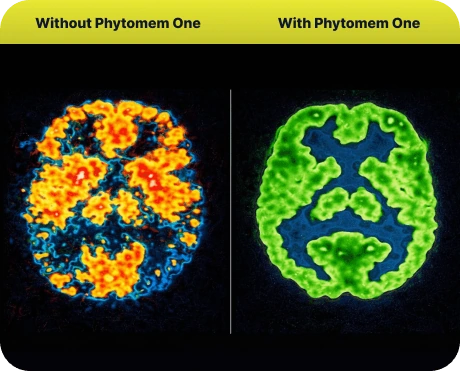
Brain supplement evidence is best read as a spectrum — from ingredients with solid human research to those resting mainly on tradition or test-tube findings — rather than a simple works-or-doesn’t verdict. The table below sorts several popular ingredients by how much good human evidence currently supports them, using plain language. Note that most of this research describes general wellness or traditional use; it is not proof that any product treats a disease.
| Ingredient | What it is studied for | Strength of human evidence |
|---|---|---|
| Omega-3 (fish oil) | General brain and heart wellness, especially with low dietary intake | Moderate |
| Saffron | Mood and cognitive wellness | Promising, developing |
| Berberine | Healthy metabolism that helps fuel the brain | Moderate (metabolic), indirect for cognition |
| Ceylon cinnamon | General metabolic wellness | Early, mostly small studies |
| Olive leaf polyphenols | Antioxidant support | Early, largely preliminary |
| “Proprietary blends” (undisclosed doses) | Broad focus/memory claims | Hard to assess — doses hidden |
Two lessons fall out of this table. First, the strongest evidence clusters around ingredients that support the whole body — circulation, metabolism, healthy fats — rather than any direct brain-boosting magic. Second, transparency matters: a formula that hides its doses inside a “proprietary blend” makes it impossible to compare against the research. You can read a closer look at two of these in our guide to saffron and berberine for brain health.
See the exact dose in Phytomem One →
Which nootropic myths need busting?
A nootropic myth is a widely repeated claim about brain supplements that sounds scientific but collapses under honest scrutiny, and a handful of them drive most of the category’s bad reputation. Naming them makes the real, smaller truth easier to see.
Myth 1: “A pill can make you limitless”
No supplement unlocks unused brainpower or raises baseline intelligence. The famous movie premise is fiction. Real botanicals offer gentle, gradual support at best, and only alongside the habits that do the heavy lifting.
Myth 2: “Natural means it always works and is always safe”
Natural does not automatically mean effective, and it does not automatically mean risk-free. Plants contain active compounds that can interact with medication, which is exactly why anyone on prescriptions should ask a doctor before starting. We unpack this further in natural versus synthetic nootropics.
Myth 3: “If some is good, more is better”
Bigger doses are not automatically better and can be worse. Well-formulated products aim for sensible, studied amounts, not the largest number they can print on a label.
Myth 4: “You’ll feel it working within minutes”
A stimulant jolt is not the same as cognitive support. Genuine botanical support tends to be quiet and cumulative, which is why a fair trial is measured in weeks, not minutes.
Are brain supplements worth it for you?
Whether a brain supplement is worth it comes down to your starting point, your expectations and your budget — not to any universal yes or no. For someone who already sleeps well, exercises and eats a varied diet, a supplement is a small optional top-up. For someone chasing a shortcut around poor habits, it is money spent in the wrong place. The decision below reframes it as a fit question rather than a hype question.
| A daily may fit if you… | It probably won’t help if you… |
|---|---|
| Already have sleep, movement and diet basics in place | Expect it to replace sleep, exercise or a good diet |
| Want a convenient single-tablet botanical layer | Want a dramatic, same-day transformation |
| Prefer transparent, disclosed ingredient doses | Are drawn in by “limitless” or cure-style claims |
| Are willing to give it several weeks of consistent use | Plan to judge it after two or three days |
| Have cleared it with your doctor if on medication | Are treating it as a medicine for a diagnosed condition |
If your honest answers cluster in the left column, a botanical daily can be a reasonable, low-drama addition. If they cluster on the right, your time and money are better spent on the fundamentals first. For a food-first perspective, compare brain food versus brain supplements.
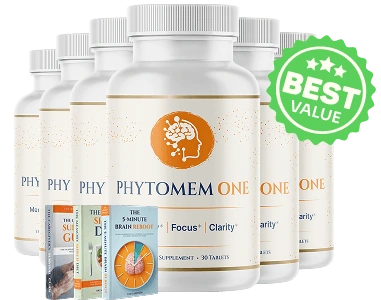
Prefer to see the actual formula?
Phytomem One is a once-daily tablet pairing saffron and Morosil red orange with a 10-in-1 botanical blend, with disclosed ingredients you can weigh against the evidence. The six-bottle bundle is the best value at $49 per bottle, with free U.S. shipping and a 60-day guarantee.
Check today’s Phytomem One pricing — from $49/bottleWhere does a botanical daily like Phytomem One realistically fit?
Phytomem One fits as a convenient once-daily botanical layer on top of healthy habits — explicitly not as a treatment, a stimulant or a substitute for sleep, food and movement. It brings together saffron, Morosil Sicilian red orange, berberine and Ceylon cinnamon alongside olive leaf, brown-seaweed extracts, banaba and kudzu, so the ingredients we discussed above arrive in one disclosed tablet rather than eight separate jars. The realistic promise is honesty and convenience: a studied blend, transparent about what is inside, that supports — but never replaces — the fundamentals. You can see the full ingredients section or read the complete Phytomem One review for the detail.
How should you set realistic expectations?
Setting realistic expectations means matching the timeframe and size of any change to what each lever can actually deliver — fast and large for habits, slow and modest for supplements. The table below keeps that honest.
| Lever | Realistic effect size | Time to notice |
|---|---|---|
| A full night of sleep | Large, same-day clarity | Next day |
| 20-minute brisk walk | Moderate, temporary lift | Same day |
| Whole-food, colourful diet | Moderate, cumulative | Weeks |
| Botanical daily supplement | Small, supportive | Several weeks |
| All of the above, stacked | Meaningfully sharper baseline | Weeks to months |
The pattern is clear: habits do the heavy lifting and a supplement adds a thin, supportive layer. That is not a knock on supplements — it is simply where they sit. For more on building the base, see how to improve memory and focus naturally.
When should you talk to a doctor?
Brain supplements are for supporting an already-healthy mind, and they are never a substitute for medical care. Speak with your doctor before starting any supplement if you are pregnant or nursing, under 18, take any medication, or have a diagnosed condition — and seek proper medical attention for persistent or worsening problems such as sudden confusion, marked memory loss, or changes that interfere with daily life. A short conversation ensures anything you add fits safely with your care, and rules out causes a capsule was never meant to address.
Frequently asked questions
Do brain supplements really work?
It depends on what you expect. No supplement makes a healthy brain suddenly smarter, but some well-studied botanicals may offer modest support for everyday clarity when paired with sleep, exercise and a whole-food diet. They are a support, not a treatment, and results vary from person to person.
Are brain supplements worth it?
They can be worth it if you already have the basics in place and want a convenient daily botanical layer, and if you set realistic expectations. They are poor value if you expect them to replace sleep, exercise or diet, or to deliver dramatic overnight changes.
What does the evidence say about ingredients like saffron and berberine?
Saffron is among the more researched botanicals for mood and cognitive wellness, and berberine and Ceylon cinnamon are studied mainly for metabolic wellness that helps fuel the brain. The evidence is promising but still developing, and it describes general or traditional use rather than any disease treatment.
How long before a brain supplement might help?
Botanicals build their support gradually rather than instantly, so most people give a daily formula several weeks of consistent use before judging it. Sleep and a brisk walk sharpen focus far faster, often the same day, which is why habits come first.
What is the biggest myth about nootropics?
The biggest myth is the limitless-pill idea that a supplement can unlock hidden intelligence or fix a tired, under-slept brain. Real-world support is modest, gradual and additive to good habits, not a shortcut around them.
Is Phytomem One a treatment for memory loss?
No. Phytomem One is a dietary supplement intended to support everyday memory, focus and clarity in already-healthy adults. It is not a treatment for memory loss, dementia or any medical condition, and persistent or worsening symptoms should be discussed with a doctor.
Try Phytomem One risk-free for 60 days →
Phytomem One is a dietary supplement, not a treatment for any medical condition. These statements have not been evaluated by the Food and Drug Administration. This product is not intended to diagnose, treat, cure or prevent any disease. Always consult a qualified healthcare professional about your individual needs.
References & further reading
- National Center for Complementary and Integrative Health (NCCIH). Dietary Supplements for Cognitive Function. nccih.nih.gov/health/cognitive-function
- Mayo Clinic. Memory loss: 7 tips to improve your memory. mayoclinic.org
- Harvard Health Publishing. Should you try brain supplements? health.harvard.edu
- Examine.com. Saffron (Crocus sativus) — evidence-based summary. examine.com/supplements/saffron
- PubMed / U.S. National Library of Medicine. Omega-3 fatty acids and cognition — research literature. pubmed.ncbi.nlm.nih.gov
These references describe the ingredients and habits in general terms and do not constitute evidence that any product treats, cures or prevents any condition.
Keep reading: brain food vs brain supplements · natural vs synthetic nootropics · back to the Phytomem One blog · homepage.