How brain supplements work: the science behind Phytomem One

Updated August 2026 · reviewed by the Phytomem Research Team. We are an independent information resource, not a medical provider, and this article is educational rather than medical advice.
How brain supplements work is mostly a story of support, not stimulation: rather than adding thoughts or memories, a well-built brain supplement aims to steady the conditions your brain already depends on — fuel, blood flow, antioxidant balance and the raw materials for healthy cells — so your own habits can work more comfortably. This guide explains those mechanisms in plain language and shows how Phytomem One maps them onto a single daily tablet.
How brain supplements are actually designed to work, in one place.
- The short version
- They support background processes — energy, blood flow and antioxidant balance — rather than directly “boosting” intelligence.
- Two routes
- A botanical route (mood and antioxidant compounds like saffron) and a metabolic route (steadier fuel from berberine and Ceylon cinnamon).
- The Phytomem idea
- Combine both routes in one tablet, because a well-fed, well-protected brain is easier to keep sharp.
- Timeframe
- Rarely same-day; most people give a botanical formula a consistent 8–12 weeks, and results vary.
The honest answer to “how do brain supplements work?” is quieter than the labels suggest. The best-studied ingredients do not force the brain to perform; they tend the ground it grows in. Understanding that difference is the fastest way to set realistic expectations — and to tell a thoughtful formula from a gimmick.
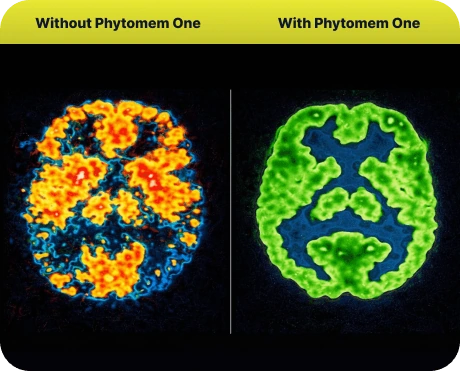
How do brain supplements actually work?
A brain supplement works by supporting the physical conditions the brain needs to function well, rather than by adding cognition directly. Your brain is only about two per cent of your body weight yet uses roughly a fifth of your energy, so it is exquisitely sensitive to its supply lines: glucose for fuel, oxygen carried by healthy blood flow, and a steady stream of antioxidants to mop up the by-products of all that activity. Most ingredients in a well-formulated supplement act on one of those supply lines. That is why the framing matters: a supplement is a support to good habits, never a treatment for any disease.
Why do most brain supplements work indirectly?
Brain supplements work indirectly because the barrier protecting your brain is deliberately selective. The blood–brain barrier is a tight filter that keeps most substances out, so few compounds simply flood in and “switch on” a neuron. Instead, many ingredients do their useful work in the body first — helping keep blood sugar steady, supporting healthy circulation, or lowering oxidative stress — and the brain benefits downstream. A minority of compounds do cross the barrier, but even those tend to modulate background chemistry rather than deliver a jolt. The upshot is simple: expect a gradual nudge to your baseline, not a stimulant-style spike.
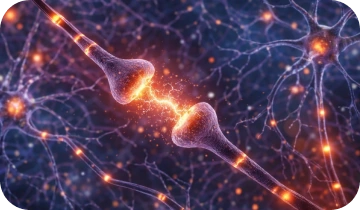
What is the difference between a botanical and a metabolic mechanism?
The two main mechanisms behind natural brain supplements are the botanical route and the metabolic route, and the strongest formulas use both. A botanical mechanism relies on plant compounds — saffron’s crocins, olive leaf’s oleuropein, cinnamon’s polyphenols — studied largely for antioxidant activity and mood-related wellness. A metabolic mechanism uses ingredients such as berberine, banaba and Ceylon cinnamon that are studied for supporting healthy blood sugar and energy handling, which is part of how the brain stays reliably fuelled. Neither route is a treatment; they are two complementary ways to keep the brain’s environment favourable.
| Mechanism | What it targets | Example ingredients |
|---|---|---|
| Antioxidant / botanical | Oxidative stress and mood-related wellness | Saffron, olive leaf, kudzu flower |
| Metabolic support | Steady blood sugar and energy handling | Berberine, Ceylon cinnamon, banaba, Morosil |
| Circulatory support | Blood flow that carries fuel and oxygen | Polyphenol-rich citrus and seaweed extracts |
| Building blocks | Raw materials for healthy cell membranes | Omega-3s and related nutrients (from diet) |
This is exactly the split we explore in more depth in our comparison of natural versus synthetic nootropics — and it is the reason a single-ingredient pill often underwhelms. A brain that is short on steady fuel will not feel sharper just because you added an antioxidant, and vice versa.
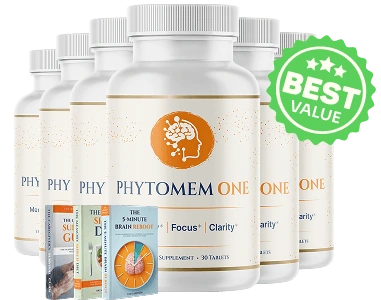
Both mechanisms, one tablet
Phytomem One pairs mood-and-antioxidant botanicals with metabolic-support ingredients so both routes are covered in a single daily step. Want the exact dose behind each mechanism? See the exact dose in Phytomem One and today’s pricing.
See the exact dose in Phytomem One — from $49/bottleWhich ingredients target which mechanism?
Every serious brain ingredient can be placed on one of the routes above, and knowing which is which turns a label into a map. Below is a snapshot of the best-known botanicals in the category, several of which appear in Phytomem One, with the mechanism each is mainly discussed for. None of these is a cure for anything; they are described in terms of traditional or general wellness use.
| Ingredient | Primary mechanism discussed | General / traditional role |
|---|---|---|
| Saffron | Antioxidant & mood | A Persian spice and one of the more researched botanicals for cognitive and mood wellness. |
| Berberine | Metabolic support | A plant alkaloid widely studied for supporting healthy metabolism and blood sugar. |
| Ceylon cinnamon | Metabolic support | “True” cinnamon, a warm spice studied for general metabolic wellness. |
| Morosil red orange | Metabolic & antioxidant | A polyphenol-rich Sicilian blood-orange extract studied for metabolic wellness. |
| Olive leaf | Antioxidant | A Mediterranean staple rich in the polyphenol oleuropein. |
| Banaba & kudzu | Metabolic & antioxidant | Traditional botanicals studied for blood-sugar and antioxidant support. |
For a deeper look at the flagship pairing, read our guide to saffron and berberine for brain health, or see the complete ingredients section on the homepage. Notice the balance: two clear antioxidant botanicals, three or four metabolic-support ingredients. That balance is the mechanism in miniature.
How long do brain supplements take to work?
Brain supplements almost never work the same day, because supporting a background process is slow by nature. A stimulant like caffeine changes how you feel in twenty minutes; a botanical that gently supports antioxidant balance or steadier fuel is working on a system that renews itself over weeks. Most people who track their own experience honestly give a formula a consistent eight-to-twelve-week trial before deciding, taking it at the same time each day so they are actually testing the ingredient rather than their memory of it. The table below sets rough expectations — and results genuinely do vary from person to person.

| Timeframe | What is realistic | What is not |
|---|---|---|
| Day 1 | You have simply taken a tablet; nothing to feel yet | A noticeable “boost” |
| Weeks 1–2 | Building steady levels; habit forming | A dramatic change |
| Weeks 4–8 | Some people report subtler everyday steadiness | Guaranteed results |
| Weeks 8–12 | A fair point to judge whether it suits you | A cure for any condition |
Because the mechanism is gradual, most people choose a multi-month supply so they never break the routine mid-trial — you can compare the packages and pricing on the homepage. If brain fog is your main concern, our guide on how to get rid of brain fog naturally pairs well with this one.
Check today’s Phytomem One pricing →
How does Phytomem One combine these mechanisms?
Phytomem One is built on the idea that a well-fed brain and a well-protected brain are two halves of the same job. Instead of betting everything on one hero ingredient, it pairs mood-and-antioxidant botanicals — saffron and olive leaf — with a set of metabolic-support ingredients including berberine, Ceylon cinnamon, banaba, kudzu and Morosil Sicilian red orange, all in one daily tablet. The botanical side is aimed at the antioxidant and mood route; the metabolic side is aimed at steady fuel. Together they cover both mechanisms described above in a single, once-daily step, so you are not stacking three or four separate bottles to get there.
None of this makes Phytomem One a treatment, and it is not intended to be. It is a supplement to the habits that do the heavy lifting — sleep, movement, a colourful diet and mental challenge, which we cover in how to improve memory and focus naturally. The supplement’s role is to keep the brain’s environment favourable while those habits work; you can see how we weighed the whole formula in the main Phytomem One review.
How can you judge whether a brain supplement is worth it?
The best way to judge a brain supplement is to check its mechanism, its transparency and its timeline before you check its marketing. A trustworthy formula tells you which ingredients target which route, names its doses rather than hiding behind a “proprietary blend,” and sets honest expectations about how long it takes. Be wary of anything that promises overnight genius, uses fake urgency, or borrows the language of medicine to imply it treats a disease. Use this short checklist:
- Named mechanisms — can you tell what each ingredient is for?
- Transparent doses — are amounts listed, not buried in a blend?
- Honest timelines — weeks, not hours, and “results vary.”
- Sensible claims — support and wellness, never cure or treatment.
- A guarantee — room to test it fairly and return it if it does not suit you.
When should you talk to a doctor?
Supplements are for supporting an already-healthy mind, not for replacing medical care. Speak with your doctor before starting any brain supplement if you are pregnant or nursing, under 18, take any medication — berberine in particular can interact with some prescriptions — have a diagnosed condition, or notice persistent or worsening problems such as sudden confusion, marked memory loss, or changes that interfere with daily life. A short conversation makes sure anything you add fits safely with the rest of your care.
Frequently asked questions
How do brain supplements actually work?
Most brain supplements work indirectly. Rather than adding thoughts or memories, they aim to support the conditions the brain relies on — steady fuel, healthy blood flow, antioxidant balance and the raw materials for brain cells — so your existing habits can do their job more comfortably. They support wellness and are not a treatment for any disease.
What is the difference between a botanical and a metabolic mechanism?
A botanical mechanism uses plant compounds such as saffron’s crocins or olive leaf polyphenols, which are studied mainly for antioxidant and mood-related wellness. A metabolic mechanism, from ingredients like berberine and Ceylon cinnamon, is studied for supporting healthy blood sugar and energy handling — part of how the brain stays well fuelled.
How long do brain supplements take to work?
There is rarely a same-day effect. Because most brain supplements work by nudging background processes rather than flipping a switch, people typically give a botanical formula a consistent 8 to 12 weeks before judging it, and individual results vary.
Do brain supplements really cross into the brain?
Some compounds cross the blood-brain barrier and some act on the body first, which then benefits the brain — for example by supporting steadier blood sugar or blood flow. Both routes are legitimate ways an ingredient can support cognitive wellness without being a drug.
Are natural brain supplements a treatment for memory loss?
No. Botanical brain supplements are designed to support an already-healthy mind and general wellness. They are not intended to diagnose, treat, cure or prevent any disease, and persistent or worsening memory problems should always be discussed with a doctor.
How does Phytomem One combine these mechanisms?
Phytomem One pairs mood-and-antioxidant botanicals such as saffron and olive leaf with metabolic-support ingredients like berberine, Ceylon cinnamon and Morosil red orange in one daily tablet, so both the botanical and the metabolic routes are covered in a single step. It is a supplement to healthy habits, not a substitute.
Try Phytomem One risk-free for 60 days →
Phytomem One is a dietary supplement, not a treatment for any medical condition. These statements have not been evaluated by the Food and Drug Administration. This product is not intended to diagnose, treat, cure or prevent any disease. Always consult a qualified healthcare professional about your individual needs.
References & further reading
- National Center for Complementary and Integrative Health (NCCIH). Dietary Supplements for Cognitive Function. nccih.nih.gov/health/cognitive-function
- Examine.com. Saffron (Crocus sativus) — evidence-based summary. examine.com/supplements/saffron
- Examine.com. Berberine — evidence-based summary. examine.com/supplements/berberine
- Harvard Health Publishing. Foods linked to better brainpower. health.harvard.edu
- Mayo Clinic. Memory loss: 7 tips to improve your memory. mayoclinic.org
- PubMed / U.S. National Library of Medicine. Botanicals, blood–brain barrier and cognition — research literature. pubmed.ncbi.nlm.nih.gov
These references describe the ingredients and mechanisms in general terms and do not constitute evidence that any product treats, cures or prevents any condition.
Keep reading: natural vs synthetic nootropics · how saffron and berberine work · improving memory and focus naturally · back to the Phytomem One blog · homepage.