Do memory supplements work? A Phytomem One fact-check
Do memory supplements work? The honest, evidence-led answer is “partly, and modestly” — a handful of ingredients have real but small support in healthy adults, while much of the marketing language runs far ahead of the science. Well-studied nutrients mostly help people who are low in them, several botanicals show gentle, gradual effects that differ from person to person, and no pill is a memory cure. A botanical once-a-day like Phytomem One belongs in that realistic frame: everyday support, not a treatment.
Do memory supplements work — the honest version.
- The short answer
- Some ingredients help modestly; many claims overreach. Effects are usually small, gradual and variable — not the dramatic “switch” that adverts imply.
- Where evidence is strongest
- Behind lifestyle first, then behind specific nutrients (omega-3s, B-vitamins) in people who are deficient. Many botanical claims sit in a mixed, still-developing tier.
- Biggest red flags
- Promises to “cure” or “reverse” memory loss, guaranteed results, hidden doses in a “proprietary blend,” and invented urgency or endorsements.
- Where Phytomem One fits
- A botanical dietary supplement for everyday memory, focus and clarity in healthy adults — support alongside good habits, never a medicine.
“Memory supplement” is one of the most-marketed phrases in wellness, and one of the easiest to oversell. Adverts show a fog lifting, a brain lighting up, a number going down on a “brain-age” test — and it is tempting to read all of that as proof. This fact-check separates what the evidence actually supports from the language designed to sell, decodes the claims you meet on labels, and shows where an honest botanical formula such as Phytomem One genuinely fits. Where the science is thin, we say so plainly.
Do memory supplements work, or is it mostly marketing?
Memory supplements work in a narrow, modest sense: a few ingredients have credible evidence for small, gradual support in healthy adults, while a great deal of the category is sold on hope rather than data. Research bodies that review the field — including the U.S. National Center for Complementary and Integrative Health — repeatedly reach the same cautious conclusion: for most healthy people, no supplement has been shown to prevent cognitive decline or deliver dramatic memory gains, and the clearest benefits appear when a supplement corrects an actual dietary shortfall. That is not the same as “nothing works.” It means the truthful claim is quiet: a helpful extra layer for some people, on top of the habits that do the heavy lifting.
The reason marketing and evidence drift so far apart is structural. Supplements are regulated as foods, not drugs, so a brand can suggest that a product “supports” memory without proving it changes any clinical outcome. That freedom is fine when the language stays honest and the doses are disclosed — and a problem when it becomes a fog machine. Our companion explainer on how brain supplements work walks through the mechanisms in more depth.
What do memory-supplement marketing claims actually mean?
Most memory-supplement marketing phrases are legal-but-loose: they are chosen because they sound like proof without carrying the obligations of a medical claim. Learning to translate three or four of the most common ones does most of the work of protecting you from a bad purchase.
What does “clinically proven” really mean?
On a supplement label, “clinically proven” has no fixed legal definition, so it can rest on anything from a large, well-run trial to a single small study on one isolated ingredient. The useful move is to ask four questions: which ingredient was tested, at what dose, in how many people, and does the finished product actually contain that amount? A study on 500 mg of an extract tells you little about a capsule that hides 50 mg inside a blend.
Does “doctor-formulated” guarantee results?
“Doctor-formulated” means a clinician had a hand in the recipe; it does not guarantee the formula works or that the doses match the research. It is a reason to look closer, not a reason to switch off scrutiny. The same goes for “natural” — a word that describes origin, not safety or effectiveness, since plenty of potent and interacting compounds are perfectly natural.
Why is a “proprietary blend” a warning sign?
A “proprietary blend” lists several ingredients under one combined weight, which conveniently hides how much of each you actually get. That matters because dose is where evidence lives: an ingredient with real research behind it at 300 mg is meaningless as a sprinkle. Transparent products disclose each amount, and a formula that will not tell you its doses is asking for trust it has not earned.
What does the evidence actually say about popular memory ingredients?
The evidence for popular memory ingredients spans a wide range, from reasonably supported nutrients to botanicals with early, mixed data. Grouping them by evidence tier is more honest than a single yes-or-no verdict, because the answer genuinely differs by ingredient and by who is taking it.
| Ingredient | What the evidence broadly shows | Honest strength |
|---|---|---|
| Omega-3 (DHA/EPA) | Structural brain fats; clearest role in people with low intake | Moderate, context-dependent |
| B-vitamins (B6, B9, B12) | Support normal cognition; benefit mainly if you are deficient | Moderate in deficiency |
| Caffeine + L-theanine | Short-term alertness and calm focus, not lasting memory change | Reliable but temporary |
| Saffron | Among the more-studied botanicals for mood and cognitive wellness | Promising, still developing |
| Ginkgo biloba | Long-used; large trials found no prevention of decline in healthy adults | Weak for prevention |
| Berberine, cinnamon, olive leaf | Studied mainly for metabolic wellness that indirectly supports the brain | Indirect, early |
Two patterns stand out. First, the nutrients with the firmest evidence mostly help people who were short of them — correcting a gap, not adding a superpower. Second, many botanicals work indirectly, on the metabolic and antioxidant background rather than on a single “memory” lever, which is why their effects are gentle and slow. For a deeper look at two headline botanicals, see our guide to saffron and berberine for brain health.
See the exact dose in Phytomem One →
Which memory-supplement claims are genuine red flags?
The clearest red flag is any claim that a supplement can cure, reverse or treat memory loss or a named disease — a promise no dietary supplement is allowed to make. Once you can spot the pattern, most misleading products give themselves away. The table below pairs the marketing line with the honest reality.
| Marketing claim | What it implies | The honest reality |
|---|---|---|
| “Reverses memory loss” | A cure for a medical condition | A disease claim no supplement can legally or truthfully make |
| “Guaranteed results in 7 days” | Fast, certain effects for everyone | Botanicals act gradually; results vary and are never guaranteed |
| “Drops your brain age 10 years” | A measurable clinical outcome | “Brain age” is a marketing metaphor, not a validated result |
| “Secret proprietary blend” | A special edge worth hiding | Hidden doses usually mean amounts too small to matter |
| “Doctors are stunned / Big Pharma hates this” | Suppressed breakthrough | Manufactured drama, not evidence |
| “Only 3 bottles left — act now” | Genuine scarcity | Fake urgency engineered to rush the decision |
A reputable product does the opposite of all this: it describes general support in careful language, discloses its doses, and points you toward habits and, where appropriate, a doctor. If you want to see how a fair review reads, our Phytomem One review lays out the formula, the amounts and the pricing without the drama.
An honest memory supplement, priced in the open
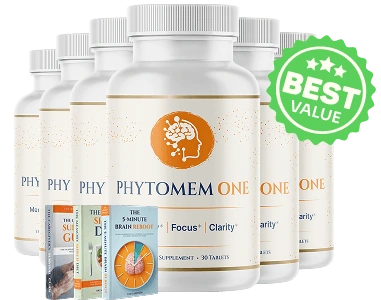
Phytomem One is a once-daily botanical tablet pairing saffron and Morosil red orange with a 10-in-1 blend — disclosed, not hidden in a mystery mix. The six-bottle bundle is the best value at $49 per bottle, with free U.S. shipping and a 60-day money-back guarantee, so a full multi-month trial never runs out mid-stride.
Check today’s Phytomem One pricing — from $49/bottleDo memory pills help people who are already healthy?
For healthy adults, the realistic expectation from a memory pill is modest, gradual support — not a transformation — because a well-rested, well-fed brain has far less room to improve from a supplement than a depleted one. In practice that might mean an afternoon that feels a touch steadier, or a task that holds your attention a little more easily, layered on top of good sleep and movement. Large trials of single ingredients in healthy people have often come back neutral, which is exactly why the honest framing is “a helpful extra,” not “a fix.” The habits that move the needle most are unglamorous and free: consistent sleep, regular exercise, a brain-friendly diet and mental engagement. Our guide to how to improve memory and focus naturally covers those foundations in full.
How does Phytomem One fit — support, not treatment?
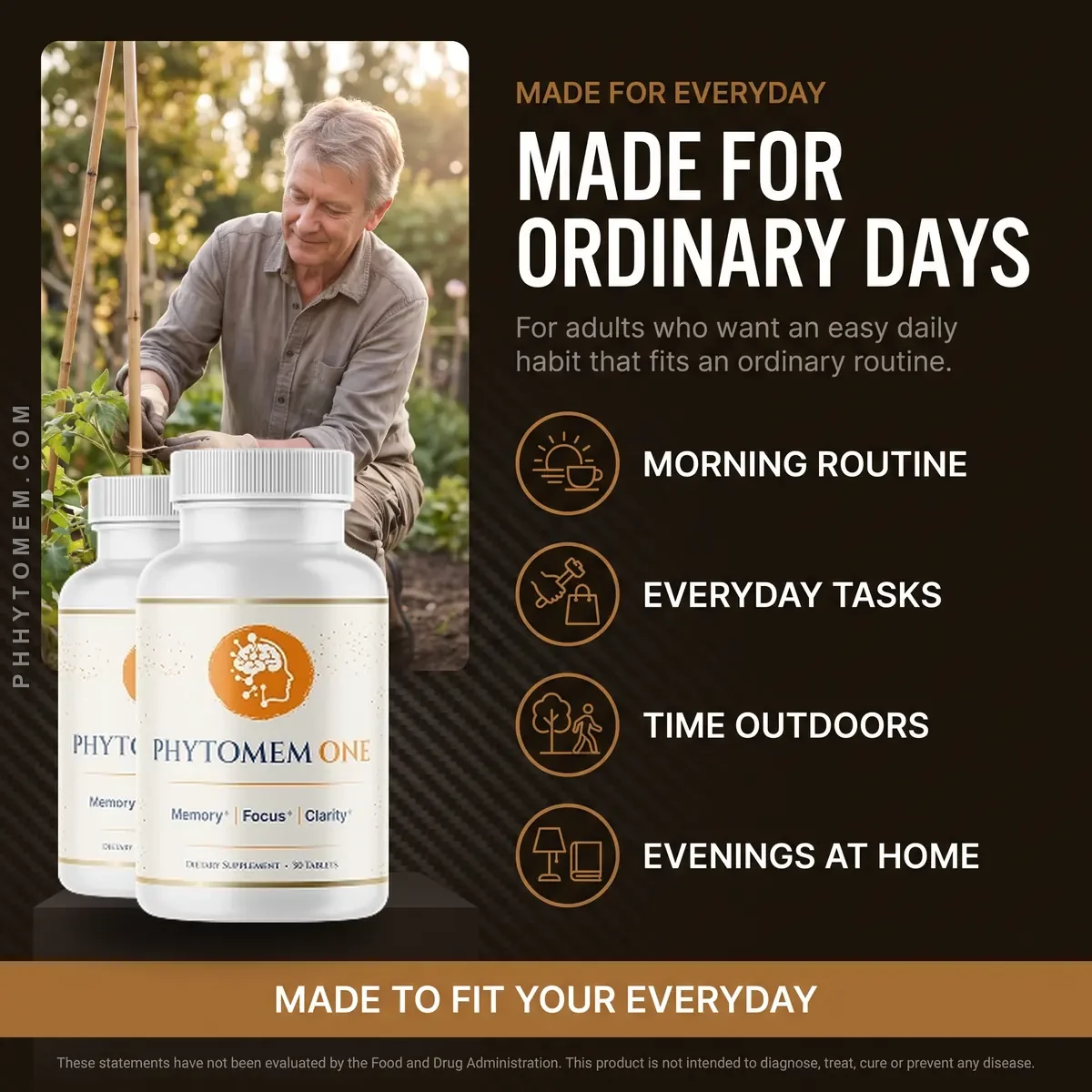
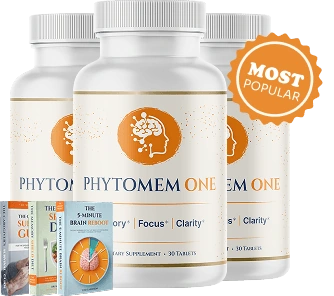
Phytomem One fits the evidence as everyday support for healthy adults, not as a treatment for memory loss or any disease. It is a once-daily botanical tablet that pairs saffron and Morosil Sicilian red orange with a 10-in-1 blend including berberine, Ceylon cinnamon, olive leaf, brown-seaweed extracts, banaba and kudzu — ingredients weighted toward the antioxidant and metabolic routes that support the brain indirectly. That is a deliberately modest promise, and it is the honest one: bring several well-studied extracts into the day in a single, repeatable step, and pair it with the habits that carry the strongest evidence. It is a dietary supplement for everyday memory, focus and clarity — nothing on the label says, or should say, that it cures or reverses anything.
How do you judge whether a memory supplement is worth trying?
You judge a memory supplement by reading the label honestly and matching it to your own health, not by the boldness of its claims. A short checklist does most of the work, whether you are weighing a botanical tablet or a multi-ingredient capsule.
- Insist on disclosed doses — each ingredient in milligrams, not a lump-sum “proprietary blend.”
- Match the dose to the research you were shown; a studied amount and a token pinch are not the same thing.
- Distrust disease and “cure” language. Careful wording is a sign of a compliant, honest brand.
- Check for interactions. Botanicals like berberine and cinnamon can affect blood sugar or blood pressure alongside medicines.
- Give it a fair, consistent trial — usually eight to twelve weeks — before you decide it did or did not help.
| Ingredient type | Typical time to notice | Best thought of as |
|---|---|---|
| Stimulants (e.g. caffeine) | Within an hour | Short-term alertness |
| Amino acids (e.g. L-theanine) | Same day | Calm, steady focus |
| Nutrients (omega-3, B-vitamins) | Weeks, if you were low | Filling a dietary gap |
| Botanical blends | 8–12 weeks | Gradual everyday support |
When should you talk to a doctor instead of reaching for a pill?
A memory supplement is for supporting an already-healthy mind, and it is never a substitute for medical care. Speak with a pharmacist or doctor before starting one if you take prescription medication, are pregnant or breastfeeding, have a diagnosed condition, or are unsure how an ingredient fits your care. More importantly, persistent or worsening problems — marked memory loss, confusion, or changes that interfere with daily life — are signals to seek a professional assessment, not to buy a supplement. Getting checked early is the safest first step, and it makes anything you do choose to add fit comfortably alongside the rest of your routine.
Frequently asked questions
Do memory supplements work?
Some memory-supplement ingredients have modest, real support in healthy adults, while many popular claims run well ahead of the evidence. Well-studied nutrients such as omega-3s and B-vitamins mainly help people who are low in them, and several botanicals show small, gradual benefits that vary between individuals. No supplement, including Phytomem One, is a memory cure or a substitute for sleep, exercise and diet.
What does “clinically proven” mean on a memory supplement label?
On a supplement label the phrase “clinically proven” has no fixed legal definition, so it can rest on anything from a large trial to a single small study on one ingredient. Treat it as a prompt to ask which ingredient was tested, at what dose, in how many people, and whether the finished product matches those amounts, rather than as a guarantee of results.
Do memory pills help people who are already healthy?
For healthy adults the honest expectation is modest, gradual support rather than a dramatic change, because a well-rested, well-fed brain has less room to improve from a pill than a depleted one. The strongest cognitive gains still come from sleep, movement and diet, with a supplement acting as a helpful extra layer for some people.
Is Phytomem One a treatment for memory loss?
No. Phytomem One is a botanical dietary supplement for everyday memory, focus and clarity in healthy adults, not a medicine and not a treatment for memory loss or any disease. Persistent or worsening memory problems need a professional assessment, not a supplement.
Which memory supplement claims are red flags?
The clearest red flags are promises to reverse, cure or treat memory loss or a named disease, guarantees of a specific result, before-and-after brain-age claims, hidden “proprietary blends” that conceal doses, and fake urgency or invented endorsements. Reputable products describe general support in careful language and disclose how much of each ingredient you get.
How long should you try a memory supplement before judging it?
Most botanical and nutrient-based memory supplements build their support gradually, so a fair trial is usually at least eight to twelve weeks of consistent daily use alongside good habits. A botanical once-a-day like Phytomem One is best judged over that kind of window, and individual results vary.
Try Phytomem One risk-free for 60 days →
Phytomem One is a dietary supplement, not a treatment for any medical condition. These statements have not been evaluated by the Food and Drug Administration. This product is not intended to diagnose, treat, cure or prevent any disease. Always consult a qualified healthcare professional about your individual needs.
References & further reading
- National Center for Complementary and Integrative Health (NCCIH). Dietary Supplements for Cognitive Function. nccih.nih.gov/health/cognitive-function
- National Institutes of Health, Office of Dietary Supplements. Dietary Supplements: What You Need to Know. ods.od.nih.gov
- Mayo Clinic. Memory loss: 7 tips to improve your memory. mayoclinic.org
- Examine.com. Nootropics — evidence-based overview. examine.com/supplements/nootropics
- DeKosky ST, et al. Ginkgo biloba for prevention of dementia (GEM study). PubMed / U.S. National Library of Medicine. pubmed.ncbi.nlm.nih.gov/19017911
- PubMed / U.S. National Library of Medicine. Dietary supplements and cognition — research literature. pubmed.ncbi.nlm.nih.gov
These references describe the ingredients and habits in general terms and do not constitute evidence that any product treats, cures or prevents any condition.
Keep reading: how brain supplements work · how to improve memory and focus naturally · back to the Phytomem One blog · homepage.