Corosolic acid & banaba leaf benefits: the Phytomem One botanical guide
Updated August 2026 · reviewed by the Phytomem Research Team. We are an independent information resource, not a medical provider, and this article is educational rather than medical advice.
Banaba leaf is a Southeast Asian botanical whose best-studied active compound is corosolic acid, a plant triterpene long associated in folk medicine with metabolic and blood-sugar wellness. In a modern formula it is used as a metabolism-focused botanical — a support for the everyday systems that fuel the brain, not a treatment for any disease. This guide explains what banaba and corosolic acid are, where the tradition comes from, what the research honestly shows, and how the leaf earns its place in Phytomem One.
Corosolic acid and banaba leaf, in one place.
- What it is
- Banaba (Lagerstroemia speciosa) is a tropical tree; corosolic acid is the triterpene its leaves are standardized to.
- Traditional use
- A folk remedy across the Philippines and Southeast Asia for metabolic and blood-sugar wellness, brewed as a leaf tea.
- What research shows
- Small human and lab studies suggest corosolic acid may influence glucose handling; the evidence is early and limited.
- Typical dose
- Extracts are standardized to 1–2% corosolic acid; the label percentage matters more than raw milligrams.
- In Phytomem One
- One botanical inside a 10-in-1 blend, contributing to the metabolic-wellness angle — not a stand-alone therapy.
If you have read a metabolism-focused label, you may have noticed “banaba leaf” or “corosolic acid” and wondered what it was doing there. It is a quietly interesting botanical: unfamiliar in the West, but a household plant across tropical Asia, and a natural fit for a blend like Phytomem One.
What are corosolic acid and banaba leaf benefits?
Corosolic acid and banaba leaf benefits refer to the metabolic-wellness properties traditionally attributed to the leaves of the banaba tree and to corosolic acid, the triterpene they are richest in. In practical terms, banaba is used in supplements as a botanical that supports healthy metabolism and steady energy — the background systems that keep the whole body, brain included, well fuelled. To be precise: banaba is a food-grade botanical with a long dietary history, not a medicine, and nothing here claims it diagnoses, treats, cures or prevents any condition. Its value is as a supportive ingredient within a routine of good food, movement and sleep.
Where does banaba leaf come from?
Banaba is a flowering tree native to the Philippines, India and Southeast Asia, where its leaves have been brewed as a wellness tea for centuries. The plant, Lagerstroemia speciosa, is admired locally for its bright pink summer blossoms and known as the “pride of India” or “queen’s crape myrtle.” It is a botanical with a genuine place in daily life, not a laboratory novelty, and that heritage is part of why it appears in plant-forward formulas today.
What is corosolic acid, exactly?
Corosolic acid is a naturally occurring pentacyclic triterpenoid acid concentrated in banaba leaves, and it is the single compound most banaba extracts are standardized around. When a label reads “banaba (standardized to 1% corosolic acid),” that percentage tells you how much of the active triterpene the extract is guaranteed to contain. Corosolic acid appears in smaller amounts in other plants, but banaba leaf is its best-known and most concentrated dietary source, which is why the two names are so often mentioned together.
How was banaba used traditionally?
In traditional Philippine and Southeast Asian folk medicine, banaba leaf was most often prepared as a simple tea to support metabolic balance and general wellness, a household remedy passed down through families. This long record of dietary use is meaningful context: it tells us the leaf has been consumed safely by many people over a long time — even though tradition on its own is not the same as controlled scientific proof.

What does the research actually say?
The modern evidence for banaba and corosolic acid is genuinely interesting but still early, drawn largely from laboratory work and a handful of small human studies. Read honestly, it points to a plausible role in glucose handling and metabolic wellness without proving that banaba treats or prevents any disease.
Corosolic acid and metabolism
Corosolic acid is the reason banaba is studied for metabolism at all. In cell and animal models, it has been observed to influence how cells take up and use glucose, which is why researchers describe it as having “insulin-like” activity in those settings. A small number of short human trials of banaba extract have reported modest effects on post-meal blood-sugar readings — the honest basis for calling banaba a metabolism-focused botanical.
What are the limits of the evidence?
The limits matter as much as the findings. Human trials of banaba have generally been small, short and varied in the extracts used, and much of the strongest data comes from cells and animals, where effects do not always translate to people. The responsible reading is that corosolic acid is a promising, well-tolerated botanical worth including in a supportive blend — not a proven treatment, and not a substitute for medical care or prescribed medication.
See the exact dose in Phytomem One
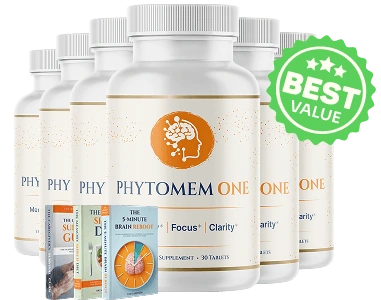
Phytomem One pairs banaba and corosolic acid with saffron, Morosil red orange, berberine and Ceylon cinnamon in one daily tablet. The six-bottle bundle is the best value at $49 per bottle, with free U.S. shipping and a 60-day guarantee.
Order Phytomem One — from $49/bottleHow much corosolic acid is in a typical banaba supplement?
The amount of corosolic acid you actually get depends on standardization, not on the raw weight of banaba on the label. Most quality extracts are standardized to between 1% and 2% corosolic acid, which means the guaranteed active content is a small fraction of the total extract. The table below shows how the percentage translates into corosolic acid at a few common banaba doses, so you can read any label with a clearer eye.
| Banaba extract dose | Standardization | Approx. corosolic acid delivered |
|---|---|---|
| 48 mg | 1% corosolic acid | ~0.5 mg |
| 48 mg | 2% corosolic acid | ~1.0 mg |
| 100 mg | 1% corosolic acid | ~1.0 mg |
| 100 mg | 2% corosolic acid | ~2.0 mg |
The takeaway is to read the standardization line, not just the milligram figure: a larger dose of a weakly standardized extract can deliver less corosolic acid than a smaller dose of a well-standardized one. Figures above are illustrative of common label ranges, not a dosing recommendation.
How does banaba fit into Phytomem One?
In Phytomem One, banaba is one contributor to a layered 10-in-1 botanical blend rather than a headline act. The formula leads with saffron and Morosil Sicilian red orange, and rounds out its metabolic-wellness side with berberine, Ceylon cinnamon, olive leaf, brown-seaweed extracts, kudzu and banaba. The logic is that metabolic wellness helps supply the steady fuel the brain relies on, so a blend that supports metabolism also supports everyday clarity. Banaba’s job is a supporting one in a stack whose whole point is breadth. For more, see our guide to saffron and berberine for brain health, or the full ingredients section.
Is banaba leaf safe, and who should be cautious?
Banaba leaf is generally well tolerated at supplement doses in healthy adults, backed by its long history of dietary use in Southeast Asia, and reported side effects at typical intakes are uncommon and mild. That said, because corosolic acid may influence blood sugar, speak with your doctor before taking banaba — or any product containing it — if you are pregnant or nursing, under 18, taking diabetes medication or insulin, managing low blood sugar, scheduled for surgery, or living with a diagnosed condition. The point is not that banaba is dangerous, but that anything affecting glucose should be coordinated with your care.
| Consideration | What to know |
|---|---|
| General tolerability | Well tolerated at supplement doses in healthy adults; long dietary history. |
| Blood-sugar interaction | May affect glucose; coordinate with a doctor if on diabetes medication. |
| Pregnancy & nursing | Not enough safety data; avoid unless a doctor advises otherwise. |
| Best form | Standardized extract (1–2% corosolic acid) within a balanced blend. |
| Realistic expectation | A supportive botanical, not a treatment; effects are gradual and vary. |
How do you use banaba for metabolism day to day?
The most sensible way to use banaba for metabolism is as one steady, supporting habit rather than a stand-alone fix. As part of a blend like Phytomem One, the routine is simple: one tablet with water at the same time each day, ideally with a meal, taken consistently over several weeks so the botanicals build their gradual support. Banaba works best alongside the fundamentals — a colourful whole-food diet, regular movement and good sleep. For the full picture, our guide to improving memory and focus naturally covers the pairing habits, and the best foods for brain health guide covers the plate.
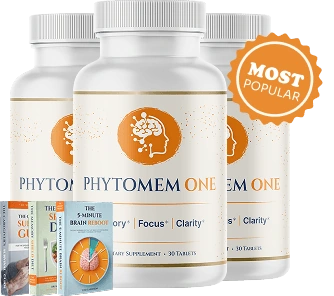
Check today’s Phytomem One pricing →
Frequently asked questions
What are corosolic acid and banaba leaf benefits?
Banaba leaf is a Southeast Asian botanical whose best-studied active compound is corosolic acid, a triterpene traditionally associated with metabolic and blood-sugar wellness. It is used in modern supplements as a metabolism-focused botanical, not as a treatment for any disease.
What is corosolic acid, exactly?
Corosolic acid is a natural triterpenoid acid concentrated in the leaves of the banaba tree (Lagerstroemia speciosa). It is the compound most banaba extracts are standardized to, and it is the reason banaba appears in metabolism-oriented formulas.
Does banaba leaf help with metabolism?
Banaba has a long folk-medicine tradition for metabolic and blood-sugar support, and small human studies suggest corosolic acid may influence glucose handling. The evidence base is early and limited, so banaba is best seen as a supportive botanical rather than proven therapy.
How much corosolic acid is in a banaba supplement?
Banaba extracts are usually standardized to 1 to 2 percent corosolic acid, meaning a 48 mg dose of a 1 percent extract delivers roughly 0.5 mg of corosolic acid. Standardization varies by product, so the label percentage matters more than the raw milligram count.
Is banaba leaf safe to take?
Banaba leaf is generally well tolerated at supplement doses in healthy adults, and it has a long history of dietary use in Southeast Asia. Because it may affect blood sugar, anyone on diabetes medication, pregnant or nursing, or with a medical condition should speak to a doctor first.
How is banaba used in Phytomem One?
In Phytomem One, banaba is one botanical within a 10-in-1 blend that pairs it with saffron, Morosil red orange, berberine and Ceylon cinnamon. It contributes to the formula's metabolic-wellness angle rather than acting as a stand-alone ingredient.
Try Phytomem One risk-free for 60 days →
Phytomem One is a dietary supplement, not a treatment for any medical condition. These statements have not been evaluated by the Food and Drug Administration. This product is not intended to diagnose, treat, cure or prevent any disease. Always consult a qualified healthcare professional about your individual needs.
References & further reading
- National Center for Complementary and Integrative Health (NCCIH). Diabetes and Dietary Supplements. nccih.nih.gov/health/diabetes-and-dietary-supplements
- PubMed / U.S. National Library of Medicine. Corosolic acid and Lagerstroemia speciosa (banaba) — research literature. pubmed.ncbi.nlm.nih.gov
- National Center for Biotechnology Information (NCBI), PubChem. Corosolic acid — compound summary. pubchem.ncbi.nlm.nih.gov/compound/Corosolic-acid
- Examine.com. Banaba (Lagerstroemia speciosa) — evidence-based summary. examine.com/supplements/banaba
- National Center for Complementary and Integrative Health (NCCIH). Using Dietary Supplements Wisely. nccih.nih.gov/health/using-dietary-supplements-wisely
These references describe the ingredients in general terms and do not constitute evidence that any product treats, cures or prevents any condition.
Keep reading: how saffron and berberine work · the best foods for brain health and memory · the Phytomem One review · back to the Phytomem One blog.